

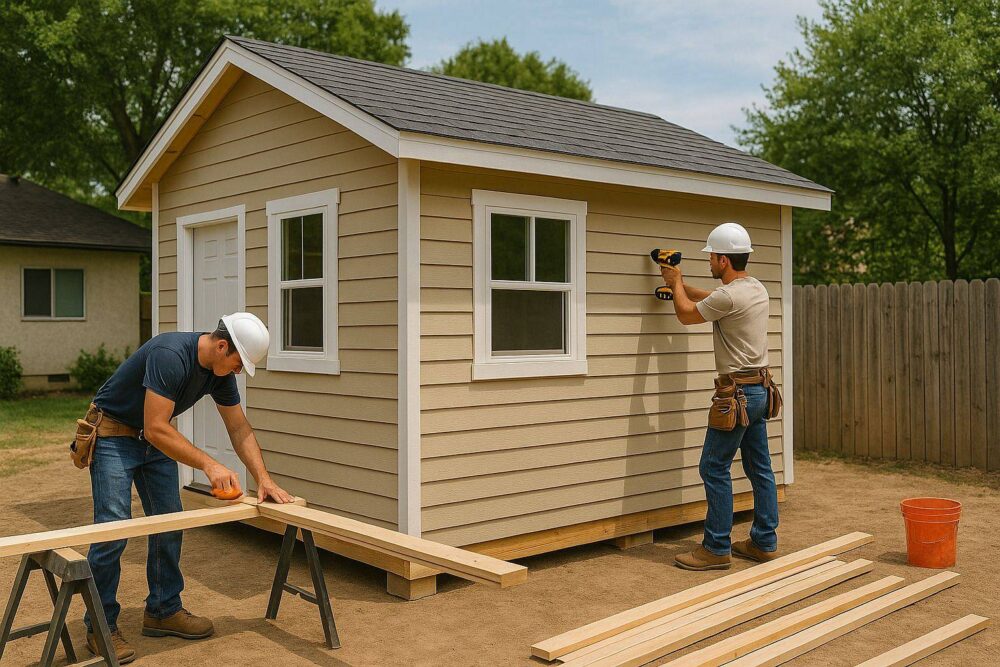
Among the most frequently misunderstood aspects of California accessory dwelling unit development is the issue of setbacks — the minimum distances required between an ADU structure and a property line, existing buildings, or other site features. Confusion about setback rules has historically caused homeowners to underestimate buildable areas on their lots or, conversely, to proceed with designs that ultimately required costly revisions. California’s statewide ADU legislation has significantly simplified and standardized setback requirements over the past several years, and homeowners across the state now benefit from clearer, more permissive rules than at any previous time.
Setback requirements are among the most practically significant factors in ADU site planning, directly affecting the size, placement, and orientation of a new unit. For homeowners in densely developed urban areas such as Los Angeles, San Francisco, and San Jose — as well as those in suburban communities throughout Orange County, the East Bay, and the South Bay — understanding how these rules apply is an essential first step in determining ADU feasibility and optimal design.
The Statewide Setback Standard for Detached ADUs
California Government Code Section 65852.2 establishes the statewide minimum setback standard for detached accessory dwelling units: four feet from the rear and side property lines. This standard applies statewide and supersedes local ordinances that would impose greater setback requirements for detached ADUs up to 800 square feet in size. Local agencies may not enforce more restrictive setback requirements on projects that comply with the statewide minimums.
Prior to the reforms enacted through AB 68, AB 881, and subsequent legislation, local setback requirements varied dramatically — from five feet in some jurisdictions to fifteen or more feet in others. The imposition of a uniform statewide four-foot minimum represented a significant step toward making ADU development viable on lots that might otherwise have had insufficient buildable area to accommodate a meaningful structure. In many communities throughout the San Gabriel Valley, the South Bay, and the Central Coast, this change opened up previously unusable rear yard spaces to productive ADU development.
Front Yard Setbacks and Street-Facing Considerations
While California law caps rear and side yard setbacks at four feet for qualifying detached ADUs, front yard setbacks follow a different standard. State law generally allows local agencies to apply their standard front yard setback requirements to ADUs. However, there are limits: local agencies cannot use front yard setback rules to effectively prohibit ADU construction on lots where an 800 square foot structure can be accommodated in compliance with the four-foot rear and side yard standards.
In practice, most ADUs are sited in the rear yard of the primary residence, where the four-foot minimum applies most directly. Front-yard-adjacent ADUs occur on through-lots or properties with unconventional configurations and require more careful analysis. Homeowners in communities with unusually deep front yard setback requirements, such as some hillside communities in Los Angeles County or planned developments in the Inland Empire, should consult with an experienced ADU designer before assuming that a front-adjacent structure is feasible.
Setbacks for Attached ADUs and Interior Conversions
Attached accessory dwelling units — those physically connected to or integrated into the primary residence — are generally subject to the setback standards of the underlying zoning district rather than the four-foot statewide minimum that applies to detached structures. This means that an attached ADU extending from the rear of a home must comply with whatever rear setback the local zoning code imposes on the primary structure.
Interior conversion ADUs, which involve converting existing living space such as a garage, basement, or ground-floor room into a separate unit without expanding the building footprint, are in many cases exempt from setback analysis altogether. Because the structure already exists and no new footprint is being created, setback compliance has already been established. This makes garage conversions and basement conversions particularly attractive from a site feasibility perspective throughout communities in San Diego, Pasadena, and Palo Alto.
How Local Jurisdictions Apply State Setback Rules
While California’s statewide setback standards establish a floor below which local agencies cannot go, they do not prevent agencies from crafting local ADU ordinances that are equal to or more permissive than state minimums. Many cities and counties have adopted local ADU ordinances that specify their own setback standards within the state framework — either matching the state minimum or providing additional flexibility for certain property types or zones.
Homeowners should review their specific city or county’s ADU ordinance in conjunction with the state standards to understand the applicable setbacks for their project. In some jurisdictions, such as the City of Los Angeles, the County of Sacramento, and the City of San Diego, detailed local ordinances include provisions that clarify how setbacks interact with easements, alleys, and neighboring structures — considerations that are not always obvious from the state law alone and that can significantly affect the buildable envelope on a given lot.
Setback Exemptions for Replacement Structures
One of the more nuanced provisions in California’s ADU law involves the replacement of existing non-conforming structures. If a property contains an existing structure — such as a detached garage — that does not comply with current setback requirements because it was built under older rules, California law permits a replacement ADU to be built in the same location with the same or lesser footprint, even if that footprint would not comply with current setback standards.
This provision has significant practical implications for homeowners throughout older California neighborhoods — particularly in first-ring suburbs of Los Angeles, the East Bay, and the Sacramento area — where many detached garages were built decades ago in configurations that modern setback codes would not allow. Replacing such a structure with a well-designed ADU is a common and cost-effective development path that preserves the historical footprint while adding significant housing and financial value to the property.
Practical Steps for Setback Analysis
Before finalizing any ADU design, a precise setback analysis should be conducted based on current survey data and applicable local and state standards. This analysis should account for all property lines, existing easements, utility corridors, and any recorded conditions that may further restrict buildable area. A reputable ADU builder will conduct or commission this analysis as part of the initial feasibility review, ensuring that all subsequent design work is based on an accurate understanding of the buildable envelope.
ADU Builders California conducts thorough site assessments as the first step in every project, ensuring that setback analysis is accurate, current, and fully compliant with both state law and applicable local ordinances. Their team serves homeowners throughout California — from the Central Valley to the coast — and has extensive experience optimizing ADU designs for lots with challenging setback configurations, tight rear yards, and complex property line geometries that require creative design solutions.
About ADU Builders California
ADU Builders California is a licensed, full-service ADU construction company serving homeowners throughout the state of California. From Los Angeles and San Diego to Sacramento, the Bay Area, Fresno, and the Inland Empire, the company provides comprehensive services from initial feasibility analysis through permitted construction and final inspection. ADU Builders California is known for its meticulous attention to regulatory compliance, its transparent project management process, and its track record of delivering high-quality accessory dwelling units that add lasting value to California properties.
ADU Builders California
1610 R St Suite 300
Sacramento, CA 95811, United States